
Cold weather in Rochester can arrive quickly, bringing snow, ice, strong winds, and long stretches of below-freezing temperatures. Before winter settles over southeastern Minnesota, homeowners should make sure their electrical systems are ready for heavier seasonal use and weather-related stresses.
Winterizing your electrical system means checking the parts of your home that will work harder or face greater exposure once temperatures drop. Inspect outlets, cords, outdoor connections, electrical panels, heating equipment, and backup power plans before the first major cold snap. Addressing electrical problems in the fall gives you time to make repairs before winter conditions make them more disruptive.
What Rochester Homeowners Should Know
-
Test GFCI outlets and inspect exterior receptacles before snow and ice begin accumulating.
-
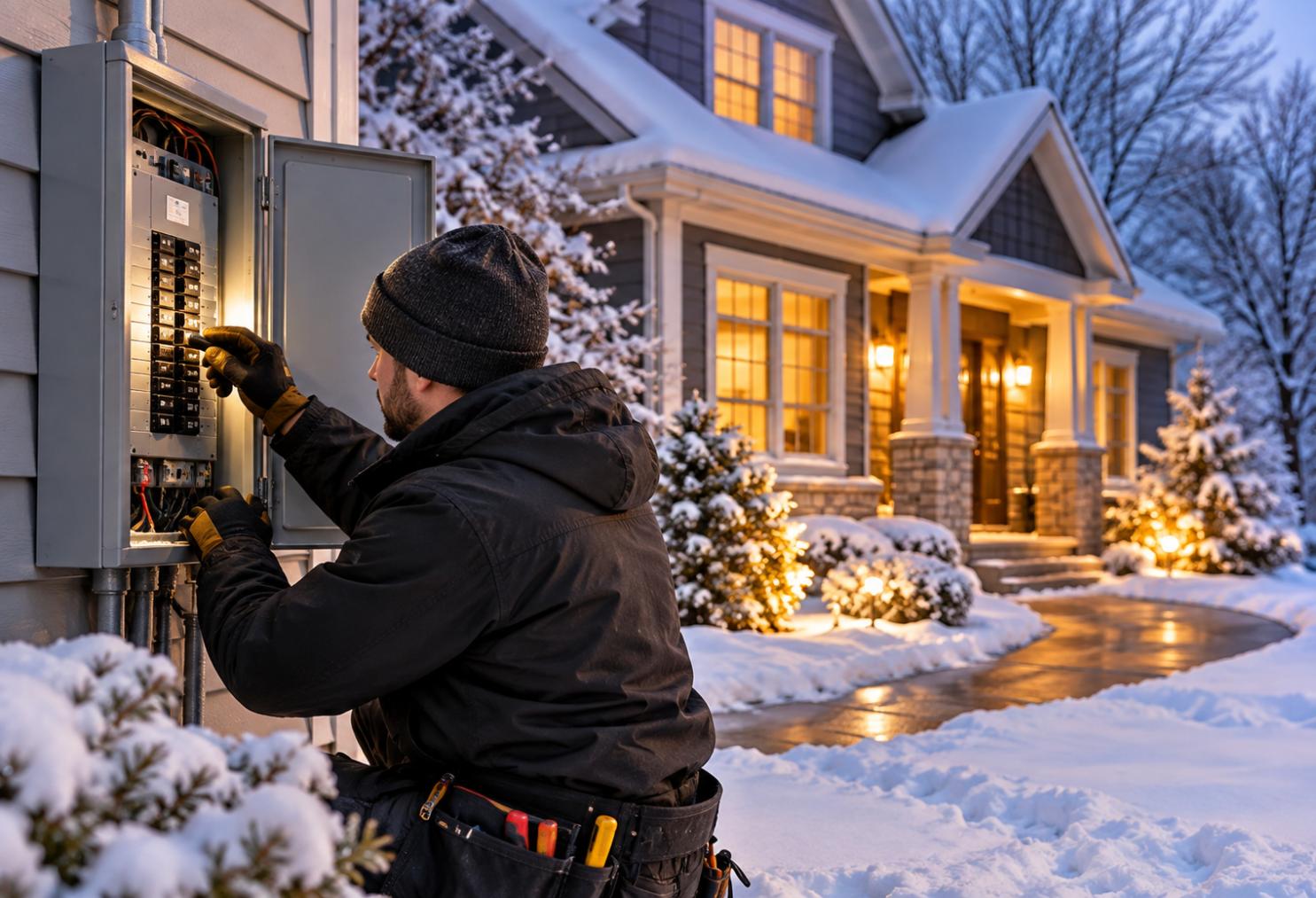
Check your electrical panel for signs of trouble before space heaters, holiday lighting, and other winter equipment increase household electrical demand.
-
Rochester Public Utilities warns that strong winds, snow, and ice can contribute to tree damage, outages, and downed power lines.
-
Keep extension cords out of wet areas and never run them beneath rugs or heavy objects.
-
Schedule an electrical inspection if you notice recurring breaker trips, buzzing, damaged outlets, burning odors, or other signs of an electrical problem.
Why Electrical Winterization Matters in Rochester
Electrical winterization matters in Rochester because southeastern Minnesota homes face months of cold, snow, ice, wind, and increased reliance on indoor electrical equipment. Preparing before those conditions arrive can uncover damaged components, overloaded circuits, and outdoor electrical problems while homeowners still have time to address them safely.
National Weather Service climate information illustrates how substantial the local winter can be. Historical climate data for the area shows an average winter temperature of 16.4°F and average annual snowfall of roughly 48 inches. Measurable snow has occurred from early October into early May.
At Kruger Electric Inc., we encourage homeowners to think about electrical preparation before the first severe cold spell rather than waiting until something stops working in January.
What Local Weather Data Tells Rochester Homeowners
Local weather data shows that electrical systems need to be prepared for a long cold-weather season, not just an occasional snowstorm. National Weather Service records show that winter is Rochester’s longest season, while Rochester Public Utilities specifically identifies strong winds, snow, and ice as conditions that can contribute to outages and electrical hazards.
That combination makes fall a practical time to inspect outdoor outlets, service equipment, panels, and circuits that will see heavier winter use.
RPU also notes an important difference between parts of the community. Older sections of the city may have overhead distribution lines, while newer neighborhoods commonly have underground lines. The winter risks around each property can therefore differ.
How Winter Electrical Problems Affect Your Home
Winter electrical problems can affect heating, lighting, appliances, home offices, and other equipment residents rely on during cold weather. A circuit that was only occasionally overloaded in summer may become more troublesome when additional lighting, portable heating equipment, humidifiers, or seasonal devices are operating.
An outage also becomes more consequential when outdoor temperatures are well below freezing. Homeowners should know how to report an outage, keep flashlights accessible, and understand which equipment in the home will stop operating without electricity.
Never attempt to repair utility lines or approach a downed line yourself.
What Warning Signs Should You Check Before Winter?
Warning signs before winter include recurring breaker trips, damaged outlets, unusual sounds, heat, and electrical equipment that does not operate consistently. Homeowners should pay particular attention to circuits and receptacles that will support additional cold-weather equipment.
Watch for:
-
Breakers that trip repeatedly
-
Buzzing or humming from switches or outlets
-
Warm or discolored outlet covers
-
Loose plugs or receptacles
-
Frayed or damaged appliance cords
-
Exterior outlets with cracked or missing covers
-
Flickering lights that occur repeatedly
-
Burning or unusual electrical odors
These symptoms should not simply be covered up by adding power strips or extension cords.
When Should You Call a Professional Electrician?
Call a professional electrician when an electrical problem involves wiring, panels, recurring breaker trips, damaged receptacles, overheating, unexplained power loss, or other conditions beyond a simple visual check. Homeowners can safely inspect accessible equipment, but electrical repairs should not become a winter DIY experiment.
Rochester Public Utilities advises residents to have qualified electricians handle wiring installation or extensions and recommends professional attention for outlets or switches that buzz or hum.
If a power line comes down during a winter storm, stay away from it and report the hazard. Treat every downed line as energized.
What Common Electrical Problems Can Winter Expose?
Winter can expose overloaded circuits, aging components, damaged outdoor equipment, and weaknesses that become noticeable as household electrical use changes. In Olmsted County homes, the combination of prolonged cold and winter storms makes several areas worth checking before the season begins.
1. Overloaded circuits: Portable heaters and other high-demand devices can place substantial loads on circuits.
2. Damaged outdoor receptacles: Moisture, ice, and snow make proper exterior electrical protection particularly important.
3. Aging wiring or panels: Older homes may have electrical systems that have been modified over decades.
4. Unsafe extension-cord use: Temporary cords can create hazards when used as permanent wiring, placed under rugs, or exposed to moisture.
5. Storm-related damage: Wind, ice, snow, and falling branches can affect overhead electrical service.
How Can You Prepare Your Electrical System for Winter?
Prepare your electrical system for winter by inspecting accessible components in early fall, testing safety devices, reducing unsafe cord use, and addressing known electrical problems before temperatures plunge. September and October are practical months for homeowners to complete these checks before winter weather becomes routine.
Test GFCI receptacles according to their instructions, especially around garages and exterior areas. Look at visible cords for cracking or fraying. Make sure outdoor receptacle covers are intact. Keep combustible materials away from electrical equipment.
Also review how you use portable heaters. Plug heating equipment into an appropriate wall receptacle according to the manufacturer’s directions rather than assuming an extension cord or power strip can safely handle it.
DIY maintenance should stop at observation, testing user-operable safety devices, and basic housekeeping. Do not remove a panel cover or attempt wiring repairs unless you are qualified to perform that work.
What Results Can You Expect From Winter Electrical Preparation?
Winter electrical preparation can identify correctable problems before they become more disruptive during cold weather. An inspection or needed repair may help address damaged components, inadequate circuits, faulty receptacles, or other conditions before your household settles into its highest-demand winter routines.
Preparation cannot prevent every outage or storm-related problem. Utility interruptions can still occur when severe weather damages trees, lines, or other infrastructure. The goal is to make the electrical system inside your property as prepared as reasonably possible.
What Winterization Mistakes Should Homeowners Avoid?
The biggest winterization mistakes involve treating temporary electrical solutions as permanent ones or ignoring warning signs until severe weather arrives. A better approach is to correct questionable electrical conditions before snow, ice, and extreme cold make repairs less convenient.
Mistake: Using extension cords as permanent wiring.
Consequence: Cords can be damaged, overloaded, or placed where heat cannot dissipate properly.
Better approach: Have adequate permanent receptacles installed where needed.
Mistake: Ignoring a breaker that repeatedly trips.
Consequence: The underlying electrical problem remains unresolved.
Better approach: Have the circuit evaluated before winter demand increases.
Mistake: Waiting until the first major cold snap.
Consequence: A problem may appear when heating-related electrical needs are highest.
Better approach: Complete inspections and repairs during fall.
What Is a Common Local Winter Scenario?
A common local scenario is a homeowner adding several electrical devices as temperatures fall, only to discover that an existing circuit cannot reliably support the new demand. The breaker begins tripping, and the homeowner responds by moving devices or adding extension cords rather than determining why the circuit is overloaded.
The safer response is to reduce the load and have recurring problems evaluated. This is especially relevant in older properties where present-day electrical needs may be very different from those anticipated when parts of the system were installed.
Which Electrical Services Can Help Prepare Your Home?
Professional electrical services can help identify and correct wiring, circuit, receptacle, panel, and other electrical issues discovered during winter preparation. The appropriate service depends on the condition of the home and the specific warning signs found during your fall inspection.
We can evaluate electrical concerns and help homeowners determine what needs professional attention before cold weather arrives.
Should You DIY or Call an Electrician?
DIY checks are appropriate for simple visual inspections and manufacturer-directed testing, while wiring repairs, panel work, recurring electrical faults, and installation work belong with a qualified professional. The dividing line should be safety, not whether a repair appears easy in an online tutorial.
Homeowners can inspect cords, clear clutter around electrical equipment, test accessible GFCIs, and identify damaged covers. Call an electrician when the task requires opening electrical equipment, modifying wiring, diagnosing repeated breaker trips, or correcting damaged components.
Where Do We Serve Around Rochester?
Our local service focus includes Rochester and surrounding southeastern Minnesota communities. Homeowners in nearby areas such as Byron, Stewartville, and other parts of Olmsted County face many of the same seasonal concerns as temperatures drop and winter storms move through the region.
What Can Happen If You Ignore Electrical Problems Before Winter?
Ignoring an electrical problem before winter can allow a manageable issue to become more disruptive when your household depends heavily on lighting, appliances, heating-related equipment, and other electrical devices. Recurring trips, damaged outlets, or overheating should be treated as warning signs rather than seasonal inconveniences.
Addressing concerns early also avoids relying on unsafe temporary fixes during periods of severe cold.
Frequently Asked Questions About Winter Electrical Preparation
When should I winterize my electrical system in Rochester?
Early fall is a practical time to winterize your electrical system in Rochester. Completing checks in September or October gives you time to identify damaged outdoor receptacles, troublesome circuits, or other electrical concerns before sustained freezing temperatures and winter storms become more common.
Should I test outdoor GFCI outlets before a Minnesota winter?
Yes. Test outdoor GFCI receptacles according to the manufacturer’s instructions and make sure exterior covers are intact before snow and ice arrive. RPU recommends GFCI protection in areas likely to be wet, including exterior locations, because these devices are designed to respond to ground-fault conditions.
Are space heaters safe to use in Rochester homes?
Space heaters should be used only according to the manufacturer’s safety and electrical instructions. Avoid improvised extension-cord arrangements and keep heaters away from combustible materials. If using a heater repeatedly causes a breaker to trip, stop treating the breaker as an inconvenience and have the electrical issue evaluated.
What should I do if a breaker keeps tripping during winter?
Reduce the electrical load and arrange for professional evaluation if a breaker repeatedly trips. Frequent trips can indicate an overloaded circuit or another electrical problem. Do not repeatedly reset a breaker without addressing the reason it is opening, especially when winter equipment has recently been added.
What should Rochester residents do around downed power lines?
Stay well away from downed electrical lines and report them to the utility or emergency authorities as appropriate. RPU warns that a fallen line may remain energized even when it is not sparking. Never touch the line, nearby branches, fences, or other objects that may have become energized.
Do older Rochester homes need extra electrical preparation?
Older homes can benefit from closer attention if their electrical systems have aged or been modified over time. Age alone does not mean a system is unsafe, but recurring breaker trips, loose receptacles, unusual sounds, damaged wiring, or reliance on numerous extension cords are good reasons to request an evaluation.
Can snow and ice cause electrical problems in Olmsted County?
Yes, winter weather can contribute to electrical problems, particularly around outdoor equipment, overhead lines, trees, and utility infrastructure. RPU notes that strong winds, snow, and ice can lead to tree damage, outages, or downed lines, making pre-winter preparation and storm awareness valuable for area homeowners.
Should I have my electrical panel checked before winter?
Consider professional evaluation if your panel shows warning signs or your household has recurring electrical problems. Breakers that trip frequently, signs of overheating, unusual sounds, or difficulty supporting normal household demand should be investigated rather than ignored until the coldest part of winter.
Get Your Home Electrically Ready for a Rochester Winter
A little preparation before the temperature drops can help uncover electrical concerns while there is still time to address them. We can help you evaluate problems and prepare your home’s electrical system for the demands of another southeastern Minnesota winter.
Prepare Your Home Before the Cold Sets In
Get electrical concerns addressed before winter weather makes them harder to ignore.